)
Health care providers struggle to catch early signals of cognitive decline. AI and computational neuroscientist Ehsan Adeli’s innovative computer vision tools may offer a solution.

Health care providers struggle to catch early signals of cognitive decline. AI and computational neuroscientist Ehsan Adeli’s innovative computer vision tools may offer a solution.
 Exciting news from the Stanford Translational AI Lab (STAI)! On April 17, our very own PhD student Favour Nerrise delivered an extraordinary three-minute presentation of her doctoral research and walked away with both of the competition’s highest honors: the People’s Choice Award and the Judges’ First Prize.

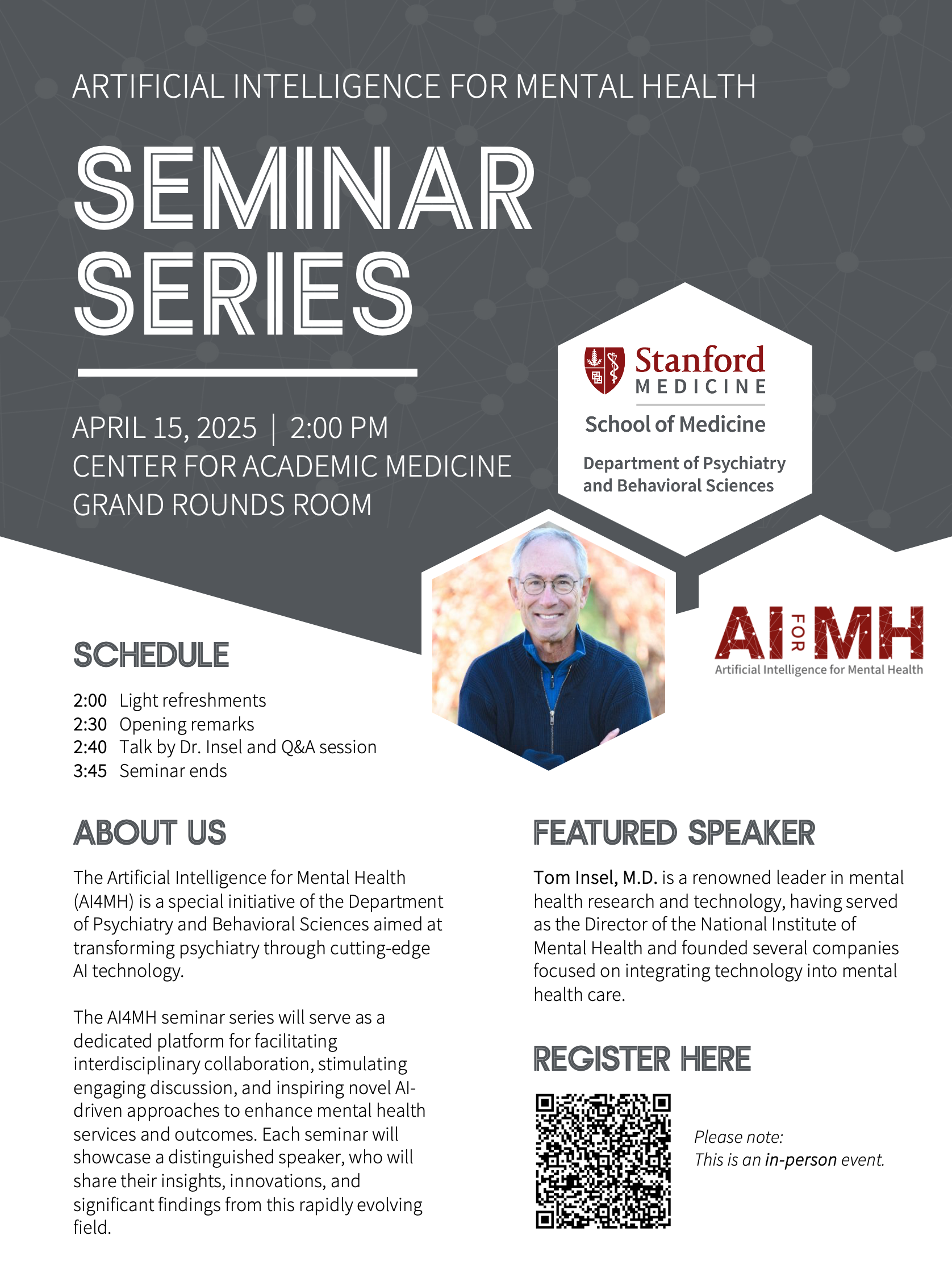
Stanford University has launched an important new initiative on AI for mental health, AI4MH, doing
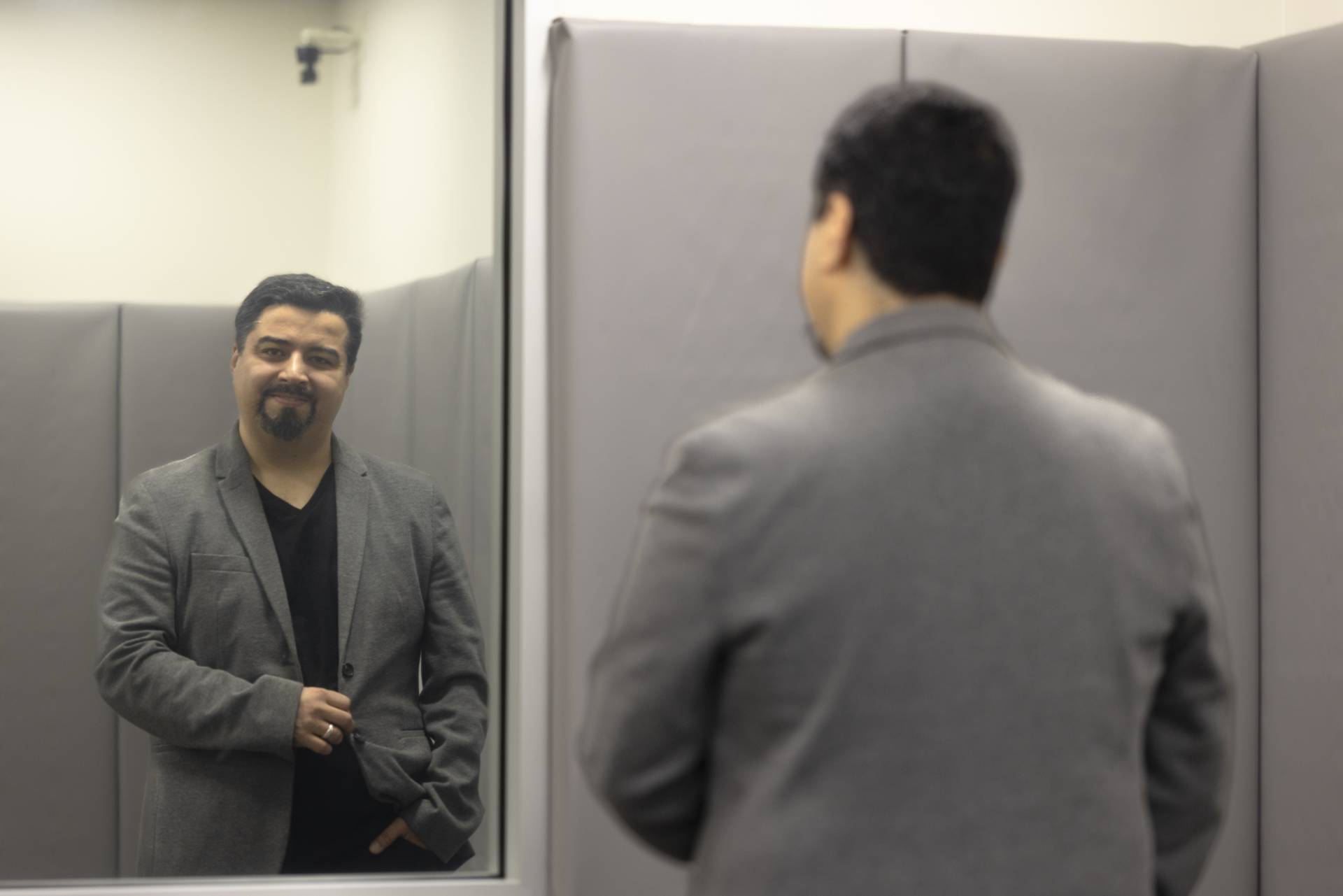
AI models are trained to mimic patterns found in data,” said Ehsan Adeli, director of the Stanford Translational AI in Medicine and Mental Health Lab. “They recognize and respond to textual cues, but they don’t really understand emotions the way humans do. Instead, they simulate an understanding by processing massive amounts of data.
The transition from homogeneous to heterogeneous machine learning in neuropsychiatric rese

The Language of Motion: Unifying Verbal and Non-verbal Language of 3D Human Motion

Six interdisciplinary research teams received a total of $3 million to pursue groundbreaking ideas in the field of AI. Congratulations to Ehsan Adeli, assistant professor of psychiatry and behavioral sciences, PI for the newly funded project entitled, "A Multidimensional Odyssey into the Human Mind!
1070 Arastradero Rd,
Palo Alto, CA 94304-5990
staiadmin@stanford.edu